
Latin hits, non-stop
A written guide to the Caribbean and Afro-Latin styles that make up a Latin hit-music playlist.
Latin hits, non-stop

The name Radio Diabla covers a Caribbean and Afro-Latin hit-music playlist: the guitar music of the Dominican Republic, the arranged dance music of Cuba and New York, the coastal styles of Colombia, the urban Caribbean pattern that reshaped Spanish-language pop, and the slow Angolan style that travelled into the same rooms.
These pages set out what each of those styles actually is: where it came from, what instruments carry it, how fast it moves, and why it sits where it does in an hour of music. They are written for listening rather than for dancing lessons.
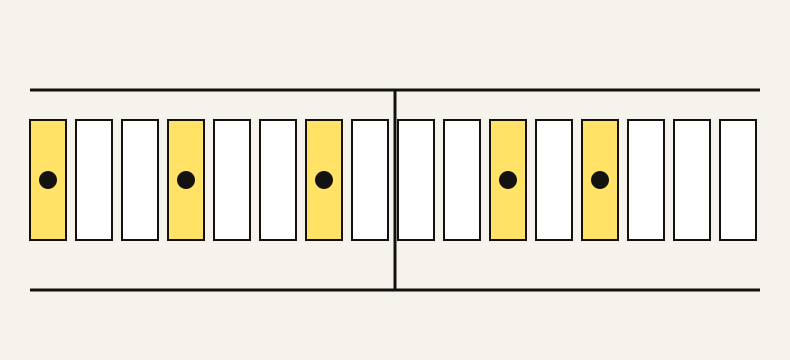
Two repeating patterns decide most of what you hear. Clave is a two-bar reference that the whole Cuban-derived ensemble plays against, fixed in one direction for the length of a piece. Dembow is a one-bar drum part that simply turns, which is why reggaeton feels circular where salsa feels like a question and an answer.
Underneath both sits the tumbao, a bass figure that deliberately arrives before the downbeat. It is the part that makes a band lean forward, and it is the hardest thing to imitate.

An hour of hit music sounds spontaneous and is not. Records are sorted into a handful of rotation categories by how often each should be heard, and a clock diagram fixes the shape of the hour before any title is chosen.
That shape is a tempo shape. Cumbia sits below everything and gives a sequence somewhere to rest; merengue sits at the top and is used as a peak rather than a bed. Texture matters as much as speed, which is why a guitar record and a horn record are rarely joined by accident.
 Puerto Rico and PanamaReggaetonThe dembow pattern that built modern Latin pop
 The Dominican RepublicBachataGuitar music from the Dominican countryside
 New York City, from Cuban and Puerto Rican rootsSalsaBig-band Caribbean dance music organised around the clave
 The Caribbean coast of ColombiaCumbiaA walking two-beat pulse that travelled the whole continent
 The Dominican RepublicMerengueThe fastest straight-ahead dance music on the list
 AngolaKizombaSlow Angolan dance music sung mostly in Portuguese
 CubaCubatonReggaeton rebuilt with Cuban rhythm and Cuban phrasing
A Latin hit-music service is followed the way any streaming radio format is followed: you join it partway through, stay for a run of records, and leave again. Nothing is announced in advance, and the sequence is meant to make sense wherever you come in.
The written pages here are for the part that a playlist cannot explain by itself. When a record turns up that moves differently from the one before it, the style pages say what that difference is, and the guides say why a programmer might have put the two together.